
Services
Entertainment Centers
The television may be the center of a living room, but that does not mean the entire room has to look as though it was designed around a screen. Loose wires, gaming systems, speakers, streaming devices, remotes, receivers, and other electronics can quickly turn a living room wall into one of the most cluttered areas of the home. A basic media console can help, but standard furniture does not always fit the wall properly or provide the storage a household actually needs.A custom entertainment center gives you more control over the space.
Wood Crafters designs and builds custom entertainment centers in Costa Mesa for homeowners throughout Orange County and Los Angeles County. Each project can be planned around the room, television size, media equipment, storage requirements, and the overall style of the home.Some homeowners want a simple entertainment cabinet below the TV. Others prefer an entire wall of built-in cabinetry, shelving, drawers, and display areas.The important part is creating something that feels like it belongs in the room.
More About Entertainment Centers
Entertainment Centers Built Around Your Space
Standard entertainment furniture comes in fixed dimensions.
That can work when the wall and television happen to match those measurements. But many homeowners end up with unused gaps, furniture that feels too small for the wall, or a cabinet that does not provide enough room for their equipment. Custom entertainment centers are planned differently.
The available wall space can be measured first. Then the television, ceiling height, nearby windows, flooring, electrical outlets, speakers, and other room features can be taken into account.This makes it possible to build an entertainment center that fits naturally within the room rather than looking like another piece of furniture placed against the wall.
More Than a Place for Your Television
Modern entertainment setups involve much more than a television. You may have a soundbar, gaming console, streaming device, receiver, speakers, router, controllers, movies, and other equipment that needs a permanent home.
Where should all of those things go? That is an important question to answer before the cabinetry is built.
Some items need to remain easy to reach. Others can be stored behind cabinet doors. Devices used every day should not be placed somewhere inconvenient simply because the room looks cleaner that way.
Custom media cabinetry allows storage to be designed around the equipment you actually use. The result can be a cleaner room without making everyday entertainment more difficult.
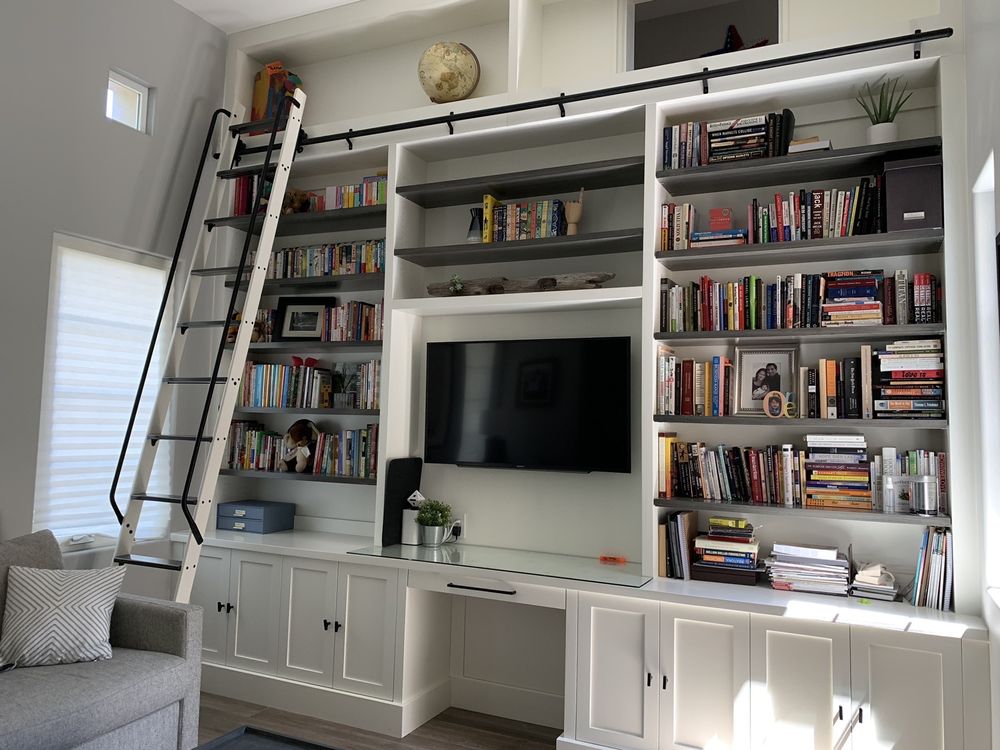
A built-in entertainment center can transform a plain television wall into a finished part of the home's interior.
Instead of having a TV floating above a separate console, cabinetry and shelving can help connect the entire wall.
Some homeowners prefer cabinets and shelves on both sides of the television.
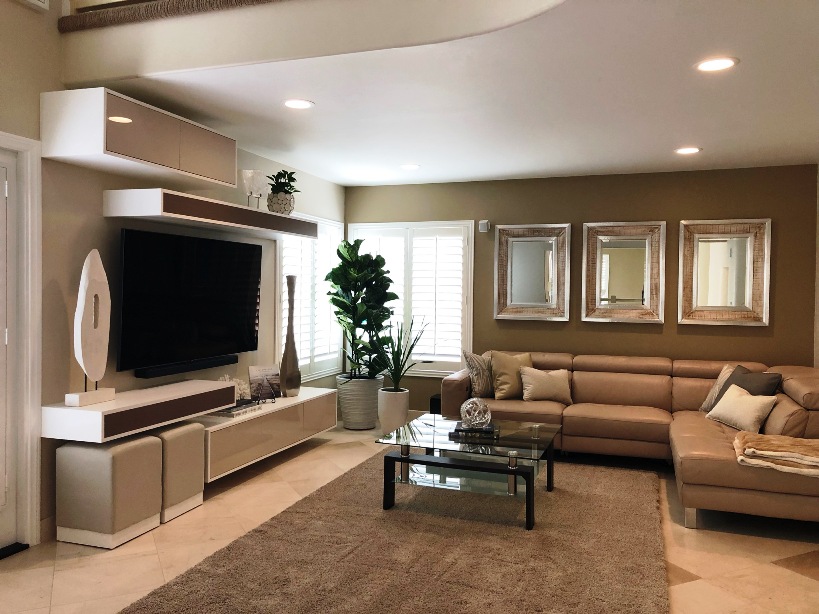
Others want something more minimal, such as long lower cabinets with a wall-mounted TV above them.
There is no rule saying an entertainment center needs to fill every inch of the wall.
In many rooms, leaving some open space creates a cleaner and more balanced appearance.
The design should be based on the room rather than a predetermined template.
Media walls have become a popular way to combine television placement, storage, and interior design into a single feature.
A custom media wall may include lower cabinetry, shelving, display areas, hidden storage, or space for speakers and electronic equipment.
The goal is to make the wall look intentional.
Cabinet proportions, television placement, shelf spacing, and open areas all affect how the final installation feels.
When these elements are designed together, the entertainment wall can become part of the architecture instead of simply serving as a place to hold electronics.
Entertainment areas often need storage for more than media equipment.
Books, children's toys, games, blankets, photographs, magazines, and other household items often end up in the living room.
Custom cabinetry can provide a place for those belongings without making the room feel cluttered.
Lower cabinets can keep items hidden behind doors.
Drawers can provide easy access to smaller objects.
Open shelves can display books, plants, photographs, artwork, and decorative pieces.
The right balance between open shelving and closed storage depends on how you use the room.
A home with children may benefit from additional closed storage. Another homeowner may prefer more display space for books or collections.
Custom construction allows those decisions to be made around your lifestyle.
Wires can quickly ruin the appearance of an otherwise well-designed entertainment area.
Televisions and media equipment may require HDMI cables, power cords, speaker wires, internet connections, and several other cables.
Planning for those connections during the design stage can help create a cleaner finished appearance.
Cable access should also remain practical.
Equipment changes over time. A new television, gaming system, streaming device, or audio component may require different connections.
The goal is not simply to hide every wire permanently. The better approach is to keep cables organized while allowing reasonable access when something needs to be replaced or upgraded.
Electronic equipment can create heat.
Receivers, gaming consoles, amplifiers, and other devices may require airflow to operate correctly.
That should be considered when planning enclosed entertainment center cabinets.
Some components may work well behind cabinet doors, while others may benefit from more open storage or ventilation.
Thinking about equipment placement before the cabinetry is built helps prevent problems later.
It also makes the entertainment center more practical for everyday use.
An entertainment center can also give you a place to display the things that make the room feel personal.
Books, framed photographs, artwork, plants, decorative objects, and collections can all become part of the design.
Shelf height and spacing matter.
Identical small shelves may look neat but can limit what you can display in the future. Larger openings may provide more flexibility.
Some homeowners want symmetrical shelving.
Others prefer a less formal arrangement.
There is no single correct layout.
The best shelving design is one that fits the scale of the wall and gives you enough flexibility to use the space over time.
The material used for an entertainment center can completely change the feeling of the room.
Wood Crafters offers wood choices such as maple, walnut, teak, red oak, and white oak.
Each wood has its own grain, color, and character.
Walnut can create a rich and warm appearance. White oak can bring natural texture while still feeling clean and contemporary. Maple provides a versatile look that can work with many different styles.
The right choice depends on more than personal preference.
Flooring, wall colors, furniture, lighting, and existing woodwork should all be considered.
When a custom entertainment center covers a large portion of the wall, material selection becomes an important part of the overall room design.
Natural wood is not the only option.
Painted entertainment centers can work beautifully in modern, transitional, and traditional interiors.
A painted finish may help the cabinetry blend with the wall or coordinate with existing trim and other architectural features.
Wood Crafters offers customizable finishing options that may include paint colors, glazing, texturing, and clear coatings.
The finish should be chosen with the rest of the room in mind.
A color that looks attractive in a small sample may feel very different when used across an entire entertainment wall.
A custom entertainment center does not need to look heavy or traditional.
Modern designs can be simple.
You might choose clean lower cabinetry with a wall-mounted television.
Floating-style cabinets can help make the room feel more open.
Shelving may be limited to one or two areas instead of filling the entire wall.
Hardware can also be kept minimal.
Sometimes the biggest advantage of custom cabinetry is that it allows the design to become simpler rather than more complicated.
Everything can be sized and positioned intentionally.
Many living rooms combine the television and fireplace within the same general area.
This can create a strong focal point, but the layout needs careful planning.
The television, fireplace, shelving, and cabinetry should feel balanced.
Some projects may place custom cabinets on both sides of a fireplace.
Others may combine a fireplace, television, and storage into one complete media wall.
Existing fireplace conditions, heat, clearances, and room dimensions should always be considered before finalizing the cabinetry design.
The objective is to make everything feel connected instead of forcing several separate features onto one wall.
Televisions continue to change in size.
That is worth thinking about before building permanent cabinetry tightly around your current screen.
You may own a 55-inch television today but decide to purchase something larger several years from now.
If the cabinetry creates an opening that fits the current TV exactly, upgrading later may become difficult.
A custom entertainment center can be planned with reasonable flexibility.
The same idea applies to gaming systems, receivers, speakers, and streaming equipment.
Technology changes faster than cabinetry.
A thoughtful layout can make future upgrades easier.
Entertainment centers can also become part of a larger living room built-in design.
Instead of focusing only on the television, the cabinetry can help organize the whole wall.
Lower cabinets may provide everyday storage.
Shelves may hold books and décor.
Drawers can keep smaller items organized.
The television can remain an important part of the room without becoming the only visual feature.
Built-in cabinetry can be particularly useful when standard furniture leaves awkward gaps or does not make good use of the available wall space.
Family rooms often have different storage needs than formal living spaces.
There may be gaming systems, toys, board games, movies, blankets, and other items that need to remain nearby.
A custom family room entertainment center can be designed with more closed storage while still providing space for the television and media equipment.
This helps keep everyday items accessible without requiring everything to remain visible.
For busy households, practical storage is just as important as appearance.
Wood Crafters is based in Costa Mesa and provides custom cabinetry services throughout Orange County and parts of Los Angeles County.
Homeowners can start with a very detailed concept or simply an idea of what is not working with the current room.
You may know exactly what kind of wood and cabinet style you want.
Or you may simply know that your current TV wall feels unfinished.
Both are reasonable starting points.
Photographs of your room, television dimensions, media equipment information, approximate wall measurements, and inspiration images can all help when discussing your project.
Custom entertainment centers are built specifically for the project rather than taken from warehouse inventory.
Wood Crafters typically works with a lead time of around six to eight weeks, although timing may vary depending on the size, materials, finish, complexity, and project schedule.
A simple lower media cabinet may require a different amount of work than a large floor-to-ceiling entertainment wall.
If the project is part of a larger renovation, discussing cabinetry early can make it easier to coordinate electrical work, flooring, painting, and other improvements.
A freestanding media console may be enough for some rooms.
Custom cabinetry becomes useful when you want greater control over fit, storage, materials, appearance, and how the entertainment area works with the rest of the home.
It can help you use an awkward wall more effectively.
It can provide storage that standard furniture does not offer.
It can also create a more finished appearance by tying the television, cabinetry, shelving, and room together.
Most importantly, it gives you the opportunity to design around the way you actually live.
Get in touch
Start Your Custom Entertainment Center Project
If your entertainment wall has become a collection of furniture, electronics, wires, and storage that never quite feels finished, custom cabinetry may provide a better solution.
Wood Crafters builds custom entertainment centers, media centers, TV cabinets, living room built-ins, and entertainment wall cabinetry around the space and the homeowner’s requirements.
You do not need to have every detail decided before getting started.
Think about your television size, electronics, storage needs, preferred style, and what you currently dislike about the room.
From there, the design can begin to take shape.
Call Wood Crafters at (714) 957-6242 to discuss your custom entertainment center project.
FAQs
Frequently Asked Questions About Entertainment Centers
A custom entertainment center is cabinetry designed around a particular room, wall, television, and media setup. It can include cabinets, drawers, shelves, display areas, and storage for electronic equipment.
A built-in entertainment center is designed to fit permanently into a specific area of the room. Unlike freestanding furniture, its dimensions and layout can be planned around the wall and surrounding architecture.
Yes. Custom cabinetry can be designed below, beside, or around a wall-mounted television.
The size and location of the television should be considered before final cabinet dimensions are determined.
Cable management can be incorporated into the design to reduce visible wiring and keep the media area more organized.
Access should still be maintained so cables can be changed when equipment is upgraded.
Yes.
Open shelving can be added for books, photographs, artwork, plants, and other display items.
Shelf size and spacing can be customized according to the room and the items you intend to display.
Yes.
Closed cabinets and drawers can provide storage for games, controllers, movies, children's items, electronics, and everyday household belongings.
Entertainment cabinetry can often be designed around or beside a fireplace, depending on the existing room conditions.
Fireplace type, clearances, television position, and cabinetry dimensions should all be considered before the final layout is approved.
Wood options may include maple, walnut, teak, red oak, and white oak.
The right material depends on the appearance you want and how the cabinetry needs to coordinate with the rest of your home.
Yes.
Depending on the project, finishing options may include paint, texturing, glazing, and clear finishes.
Yes.
Cabinetry can be planned around gaming consoles, controllers, receivers, streaming devices, and other media equipment.
Ventilation and access to wiring should also be considered.
It can be a good idea.
Leaving some flexibility around the television may make it easier to upgrade to a larger screen later without changing the entire entertainment center.
They can be.
Because the cabinetry is designed around the available wall, it can sometimes use space more efficiently than freestanding furniture.
The amount of cabinetry should still be appropriate for the size of the room.
A typical Wood Crafters custom cabinetry project may have a lead time of approximately six to eight weeks, although the exact schedule depends on project size and complexity.
A typical Wood Crafters custom cabinetry project may have a lead time of approximately six to eight weeks, although the exact schedule depends on project size and complexity.
Wood Crafters is based in Costa Mesa, California, and serves homeowners throughout Orange County and parts of Los Angeles County.
Start by taking a few photographs of the wall and noting your television size, media equipment, storage requirements, and any styles you like.
Then contact Wood Crafters to discuss the project.

Start Your Entertainment Centers Project
For questions about your project, availability or cabinet options, contact Wood Crafters at (714) 957-6242 or request a quote.